Building a SaaS platform with an AI agent has a strange rhythm. The agent writes a screen in five minutes. You open it, see six things that are wrong, and then spend fifteen minutes typing: "On the billing page, the second card, the button on the right is too low on small screens." The code is no longer the slow part. You are.
More exactly, the slow part is context. The agent cannot see what you see. Every piece of feedback has to carry the page, the element, the screen size, and the state of the app. When you type all of that by hand, you leave half of it out, and the agent guesses.
What good feedback contains
A comment the agent can act on without a second question has five parts:
- the exact address of the page,
- the exact element,
- the screen size and the browser,
- a screenshot of what you saw,
- one sentence on what you want.
Only the last one needs a human. The other four are facts a tool can collect for you.
The loop with Notiamo
This is the reason I built Notiamo. You add one script tag to your app. When you see a problem, you click the spot and write the sentence. Notiamo records the address, the element, the screen size, and takes the screenshot on its own.
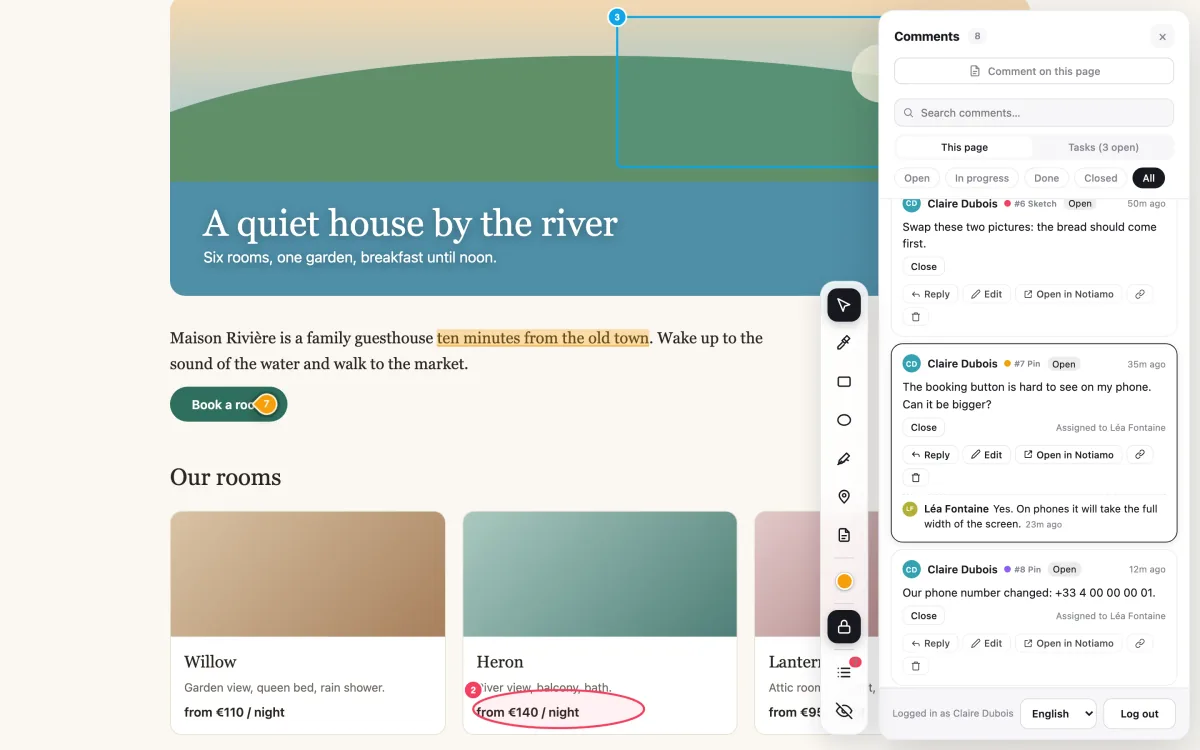
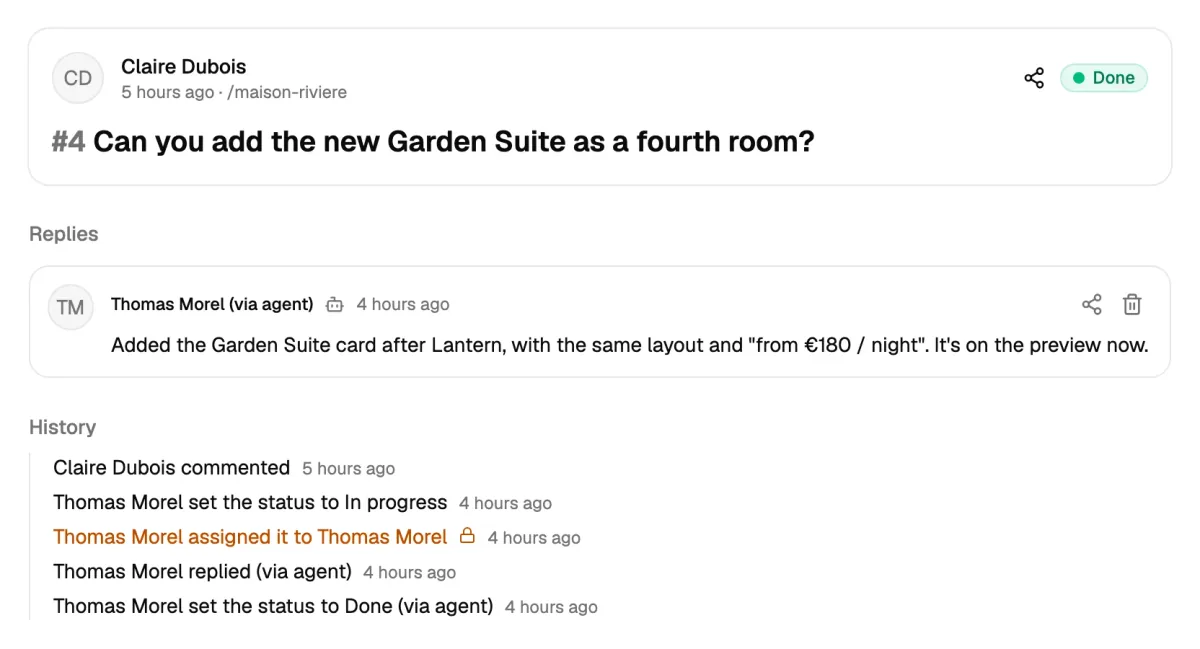
Your agent connects to Notiamo through MCP, an open standard that lets AI agents use outside tools. It works with Claude Code, Cursor, ChatGPT, Gemini, and other agents that support MCP. The agent reads the open comments with their screenshots, makes the changes, replies with what it did, and marks each item done. You check the result and close the comment, or reopen it with one more sentence.
Write one sentence. Let the tool collect the other four facts.
On the desktop and on the phone
On the desktop, you review as you work: click, comment, continue. The screenshot is automatic, so you never stop to capture, crop, and paste an image into a chat.
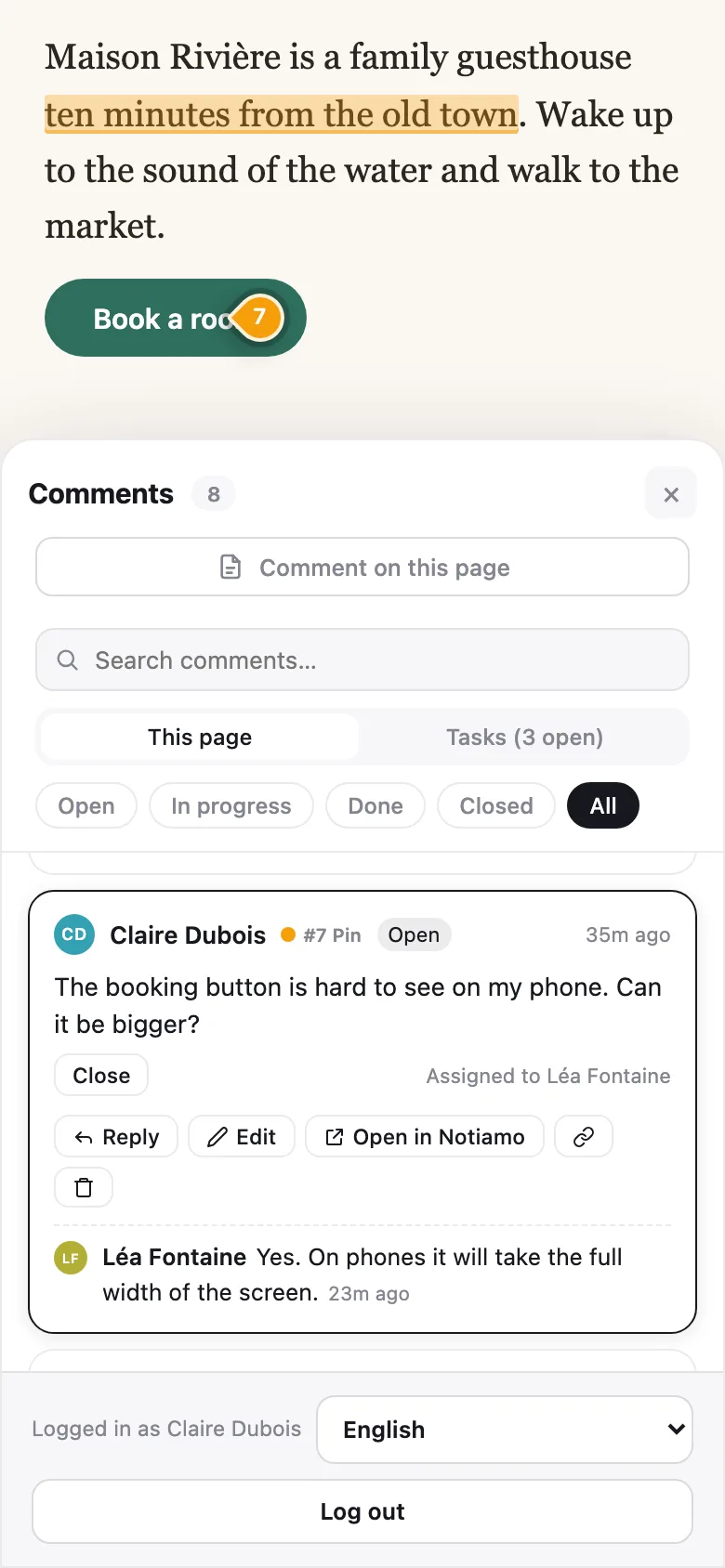
The phone is where this changes the most. Many layout problems only show on a small screen, and the phone used to be the worst place to report them. Now you open the app on your phone, tap the broken spot, and leave the comment there. The agent receives the real screen size and the real element, not your memory of them an hour later. You can test your product on the train and find the fixes done when you are back at your desk.
Why this speeds up the build
Three things happen. Feedback takes seconds, so you give more of it. The agent stops guessing, so fewer fixes come back wrong. And the comments form a queue, so the agent can work through twenty items while you do something else. You can run it on your own machine, or let a Notiamo managed agent do the updates in the cloud or on your own server.
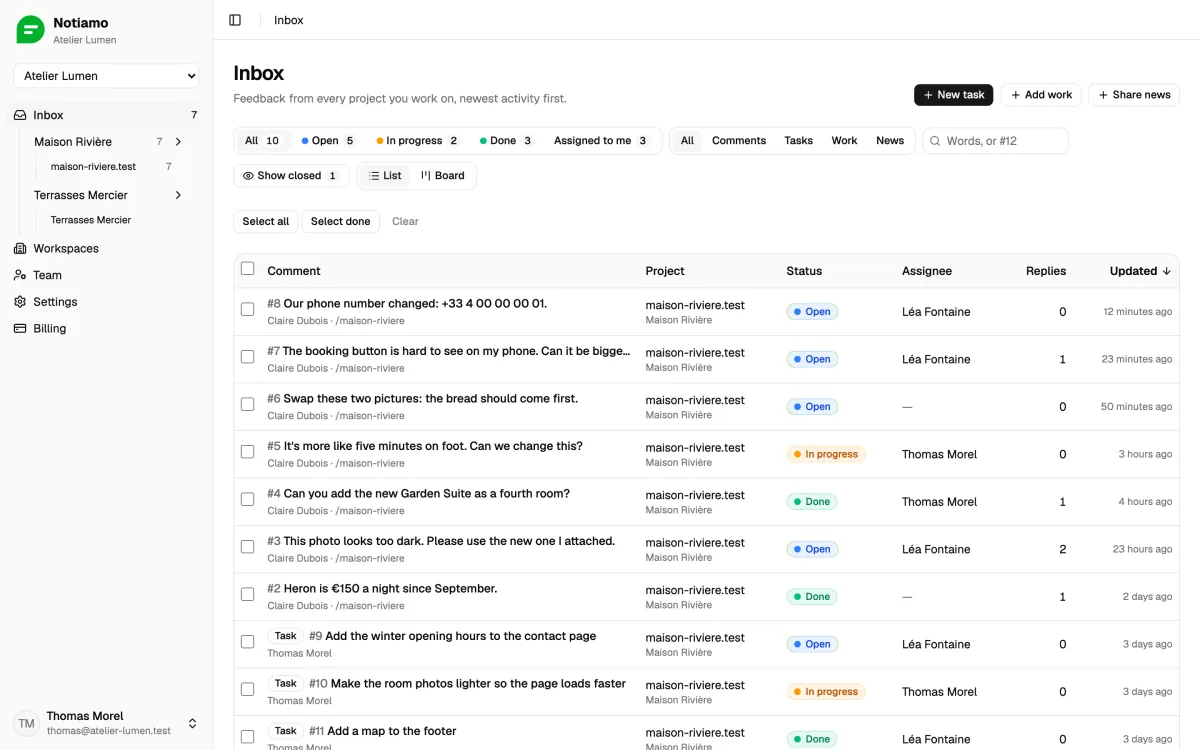
The same loop works with other people. Give access to a co-founder, a tester, or your first customers. Their clicks land in the same queue, with the same context, in front of the same agent.
Faster models will not fix a slow loop. If you build with an agent, measure the time between "I see a problem" and "the agent knows exactly what I mean". That is the number to bring down.